A strong, sustainable, faith-centered university serving present and future generations.
Education, practical opportunity, spiritual formation, and community service—built to endure.
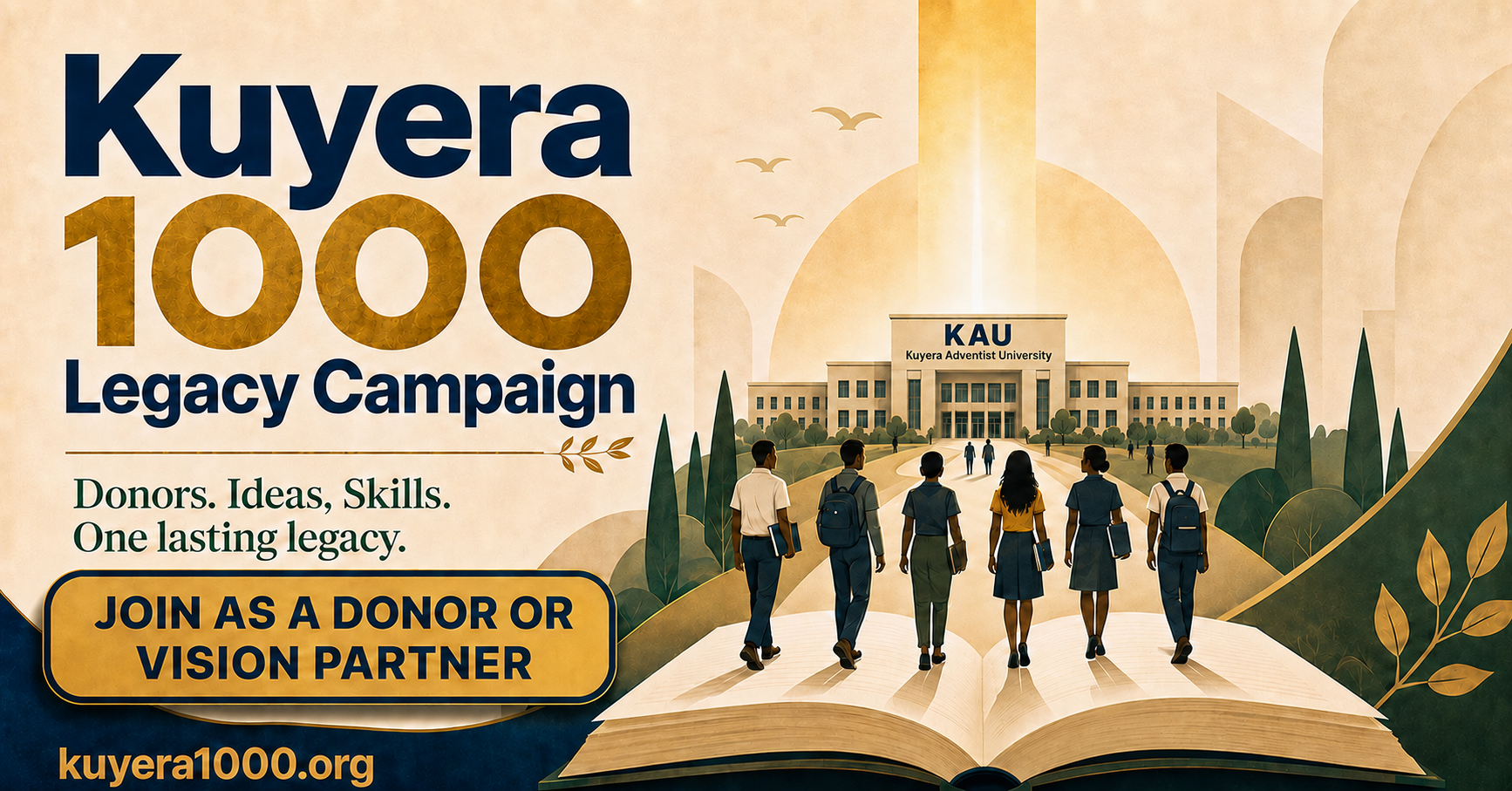
Donors, ideas, skills, and connections
Join a growing community of prospective donors and vision partners committed to building a strong, sustainable Kuyera Adventist University. You can express interest in donating, share ideas, contribute professional knowledge, promote the campaign, or help connect it with others.
Donors & vision partners
University-focused impact
Faith-centered purpose
Many ways to participate
Why Kuyera matters
Kuyera Adventist University is envisioned as a place where academic learning, practical skill, Christian character, and service work together. A well-equipped, well-led university can prepare people to serve their families, professions, churches, businesses, and communities.
Long-term support is needed because quality education depends on more than one building or one gift. It requires capable educators, relevant programs, safe facilities, technology, student support, sound systems, and responsible planning.
Education, practical opportunity, spiritual formation, and community service—built to endure.
Build a broad community that can contribute through prayer, future giving, ideas, professional knowledge, promotion, and connections.
Combine responsible philanthropy with carefully evaluated education, infrastructure, and sustainability initiatives.
A movement built one community at a time
The first 50 members will help establish momentum, share the vision, and invite others. From there, the Kuyera 1000 community can grow to 100, 250, 500, and ultimately 1,000 or more people.
Next goal: 50
Only completed registrations are counted. No names or personal details are displayed here.
Choose how you would like to participate
You may express interest in donating, offer ideas or skills, promote the campaign, make connections, or receive updates.
Possible areas of support
These are examples of what the campaign may support—not confirmed projects. Specific projects will be announced only after they are reviewed and approved.
Possible area of support
Facilities and systems that can make teaching, learning, worship, student life, and campus operations safer and stronger.
Growing educational responsibilities require dependable learning spaces, utilities, technology, safety, and student services.
Improve the campus one priority at a time, beginning with the needs that most directly strengthen learning and student life.
Better places to learn, live, study, worship, and access technology.
Greater capacity, stronger operations, and facilities aligned with approved academic needs.
Potential construction work, services, shared resources, and a stronger local institution.
Durable infrastructure can reduce disruption and support responsible institutional growth.
Possible area of support
Academic and Technical and Vocational Education and Training opportunities connected to verified workforce and community needs.
Students and community members need practical pathways from education to skilled work, entrepreneurship, and service.
Develop practical programs with qualified instructors, useful equipment, and hands-on learning.
Employable skills, practical learning, and pathways to work or self-employment.
Broader educational reach and programs that respond to demonstrated needs.
Workforce training, stronger local businesses, and opportunities for lifelong learning.
Well-designed programs may build durable educational capacity without promising financial returns.
Possible area of support
A possible teaching, community-development, and income-generating initiative linking agriculture, animal health, food systems, and practical training.
Kuyera and its surrounding community may benefit from practical agricultural education, useful products, skills, and employment opportunities.
Explore a well-managed dairy program that combines teaching, animal care, milk production, and processing.
Hands-on experience in agriculture, animal science, business, food handling, and related skills.
A possible teaching platform and recurring revenue source for approved university programs.
Potential jobs, training, market linkages, and improved access to dairy products.
If feasible and well managed, operating income could be reinvested in the university mission.
Possible area of support
Carefully evaluated enterprises that may produce recurring income while advancing education, service, and community opportunity.
A university serving generations needs diverse, responsible support—not permanent dependence on short-term donations alone.
Support only enterprises that fit Kuyera’s mission and have a clear plan for responsible operation.
Possible internships, practical learning, entrepreneurship exposure, and employment preparation.
Potential recurring income for approved educational purposes and greater institutional resilience.
Possible jobs, services, supplier relationships, and local enterprise development.
Net proceeds, if any, would support the university mission; no return or outcome is guaranteed.
Possible area of support
People-centered programs that strengthen learning, teaching, research, service, opportunity, and Christian formation.
Facilities alone cannot deliver quality education; students, educators, programs, and community relationships also require sustained support.
Support well-defined programs that help students, strengthen teaching, and expand community service.
Access, support, mentoring, stronger instruction, innovation, and whole-person development.
Qualified people, improved programs, research capacity, and deeper mission impact.
Education, outreach, training, entrepreneurship, and service opportunities.
Investing in capable people and relevant programs can strengthen the institution’s long-term ability to serve.
Intended long-term impact
Through thoughtful planning, responsible funding, careful implementation, and regular evaluation, these opportunities can create meaningful, lasting benefits for students, the university, and the surrounding community.
Clear answers before you join
A long-term movement to bring together 1,000 or more people who want to help strengthen Kuyera Adventist University for current students, the surrounding community, and future generations.
A strong university requires sustained investment in people, programs, facilities, technology, student support, and responsible development. The campaign seeks an enduring community of support rather than isolated appeals.
The university can combine quality education, practical skills, Christian formation, service, and community development in one institution that can serve generations.
Everyone who shares the vision is welcome, including alumni, families, churches, businesses, foundations, friends of Kuyera, and community partners.
No. This site invites expressions of interest. Joining lets the campaign keep you informed; it does not require a donation today.
No. It is not a contract, pledge, or financial obligation.
$1,000 per year is an aspirational goal, not a required contribution or membership fee.
Yes. When an official giving system is ready, each person may decide whether to give and may choose any amount.
University leaders will identify priority needs and present project proposals. Campaign organizers will review each proposal for benefit, cost, feasibility, and responsible use of funds before it is approved.
Before giving opens, the campaign will publish the financial safeguards that have been officially established. Donations will be recorded and used only for approved purposes.
Members of the Kuyera 1000 community will receive clear financial and project updates showing what was supported and what progress was made.
No. They are examples of what the campaign may support. Specific projects will be announced only after review and approval.
Join the list, identify your interests, share the campaign with another person, and respond when organizers announce verified ambassador or volunteer opportunities.
Yes. Groups are welcome to join the movement and may later explore approved participation options with campaign organizers.
Yes. Public name recognition is optional and requires separate permission.
Registration data is stored in a protected system, used for campaign administration and communication, and available only to authorized organizers. Personal details are not published without explicit permission.
Your name is added to the Kuyera 1000 community list. You may receive campaign news and invitations based on your selections, and you can invite someone else to join.
Join the First 50 donors and vision partners
Joining this list does not require you to donate today and does not create a binding financial commitment. It simply shows your interest in supporting Kuyera Adventist University and allows the campaign to keep you informed.
“Unless the Lord builds the house, the builders labor in vain.”Psalm 127:1